




Description
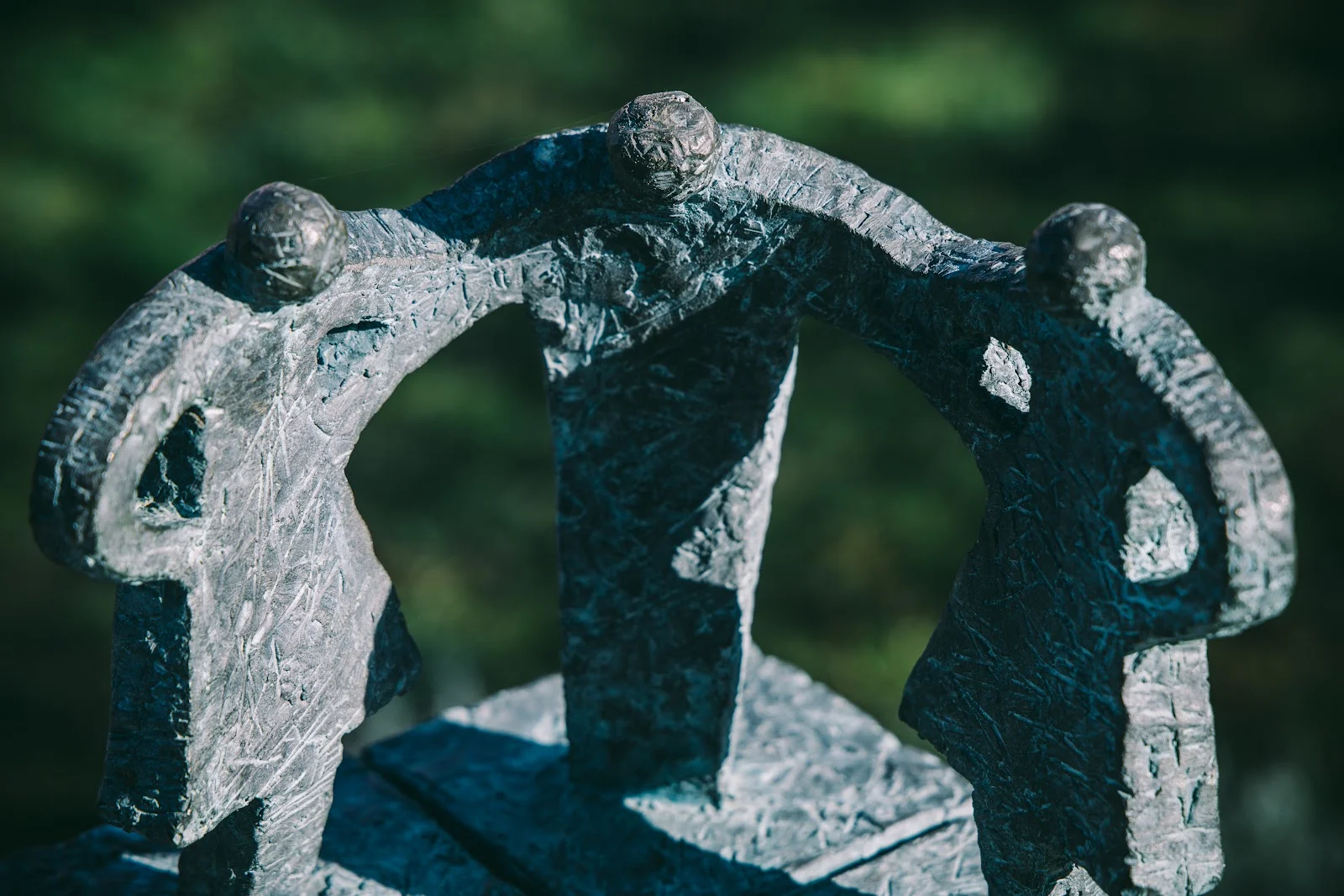
The sculpture rests on a discreet, L-shaped dark base that accentuates the warm glow of the bronze. It depicts three figures: the man standing in the center, flanked by two women. Kolodko’s genius lies in how he sets the rigid metal in motion. The folds of the skirts seem to flutter in the wind, while the posture of the arms and the slight tilt of the heads faithfully reflect the proud yet effortless stance of the csárdás. Balancing on the border between abstract and figurative depiction, the composition captures not only the dancers themselves but the very motion of the spin—the centrifugal force.
Story
The birth of the sculpture is the fruit of community collaboration and scholarly preservation. Thanks to the ethnographical research of Dr. Lujza Ratkó, it became widely recognized that the triple csárdás of Geszteréd is a unique gem in Hungarian dance history. Rather than a conventional, static monument to this rare heritage, the local community wanted something that would bring the past closer to modern generations. They commissioned the Transcarpathian-born artist, who reinterpreted the traditional dance movements and gifted the municipality this exquisite piece of public art on August 28, 2021.
Fun facts
- • A Shift in Style: This artwork breaks away from Kolodko’s typical caricature style. There are no oversized eyes or humorous props; the artist focused entirely on the silhouettes of the figures, the momentum of the skirts, and the interaction of the bodies.
- • The Rarity of the Triple Formation: Hungarian folk dance is heavily dominated by couples. The triple formation (one man with two women) is a rare exception among dance types, and the sculpture perfectly balances this spatial asymmetry.
- • A Miniature Open-Air Museum: Geszteréd did not stop at just one sculpture. Alongside the Triple Csárdás, a mini-sculpture of Francis II Rákóczi and a Trianon memorial cross have also found a home in the village, turning the municipality into a charming outdoor micro-exhibition of Kolodko’s work.


