


Description
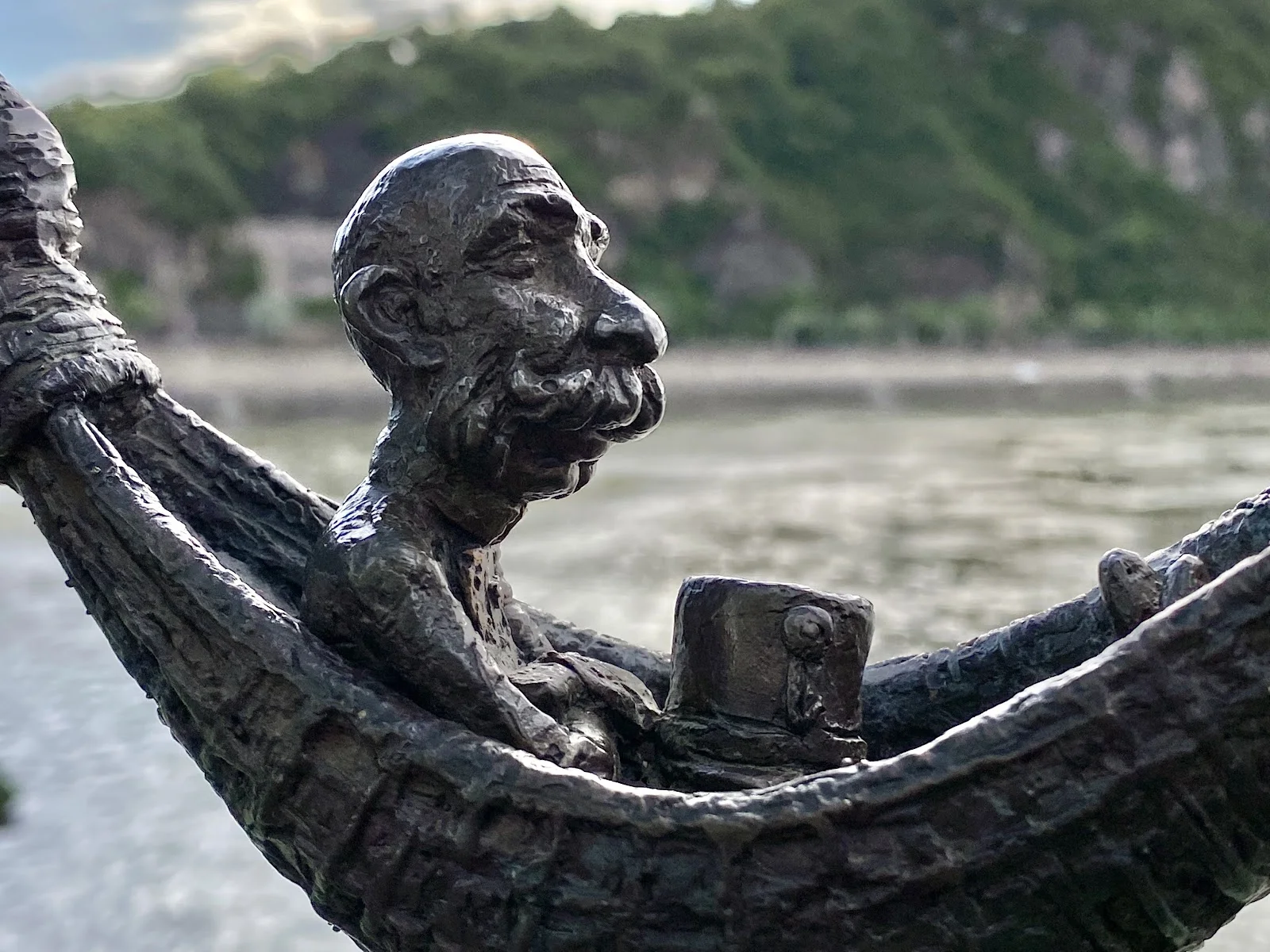
The ministatue faithfully follows Mihály Kolodko’s signature, highly detailed bronze style. The central figure is Franz Joseph, immediately recognizable by his iconic, carefully sculpted sideburns and military uniform. However, the serious depiction is completely dissolved by the context: the figure lies in a finely crafted, woven-textured hammock, with one leg casually crossed over the other and hands clasped behind his head. The hammock is suspended between two support pillars, which the artist fixed directly onto the curved railing of the Liberty Bridge. The entire composition is barely larger than an adult's palm, yet it forms a monumental contrast with the massive iron structures of the bridge.
Story
The placement of the statue is closely linked to the history of Budapest and the bridge itself. Upon its inauguration in 1896, today's Liberty Bridge was named after the ruler, bearing the name Franz Joseph Bridge until its reconstruction after World War II. The Emperor himself attended the ceremony and even hammered the last symbolic silver rivet into the structure on the Pest side. With this piece, Mihály Kolodko created a kind of alternative timeline: he brought the bridge's former namesake back to 21st-century Budapest, but stripped him of rigid imperial protocol. Besides honoring the past, the sculpture reflects recent urban culture: starting in the mid-2010s, during the summer bridge closures (the popular "Szabihíd" project), it became a trademark of Budapest youth to hang hammocks from the bridge's iron beams to relax. Kolodko fused these two motifs—the Emperor and modern Budapest public space culture—into a single, brilliant artwork.
Fun facts
- • The Imperial Seal: Although the statue appeared as part of an illegal guerrilla action, the artist stylishly secured it to the bridge with two small padlocks, prompting the city management to leave it in place.
- • The Legend of the Silver Rivet: The statue is located just a few meters from the spot where Franz Joseph placed the last rivet of the bridge in 1896 (this rivet was later stolen and replaced with a replica hidden behind a glass window at the bridgehead).
- • Weatherproof Attire: During the cold winter months, fans of the guerrilla sculpture regularly surprise the Emperor with tiny, hand-knitted scarves and hats so that he "doesn't catch a cold" on the windy railing above the Danube.

