



Description
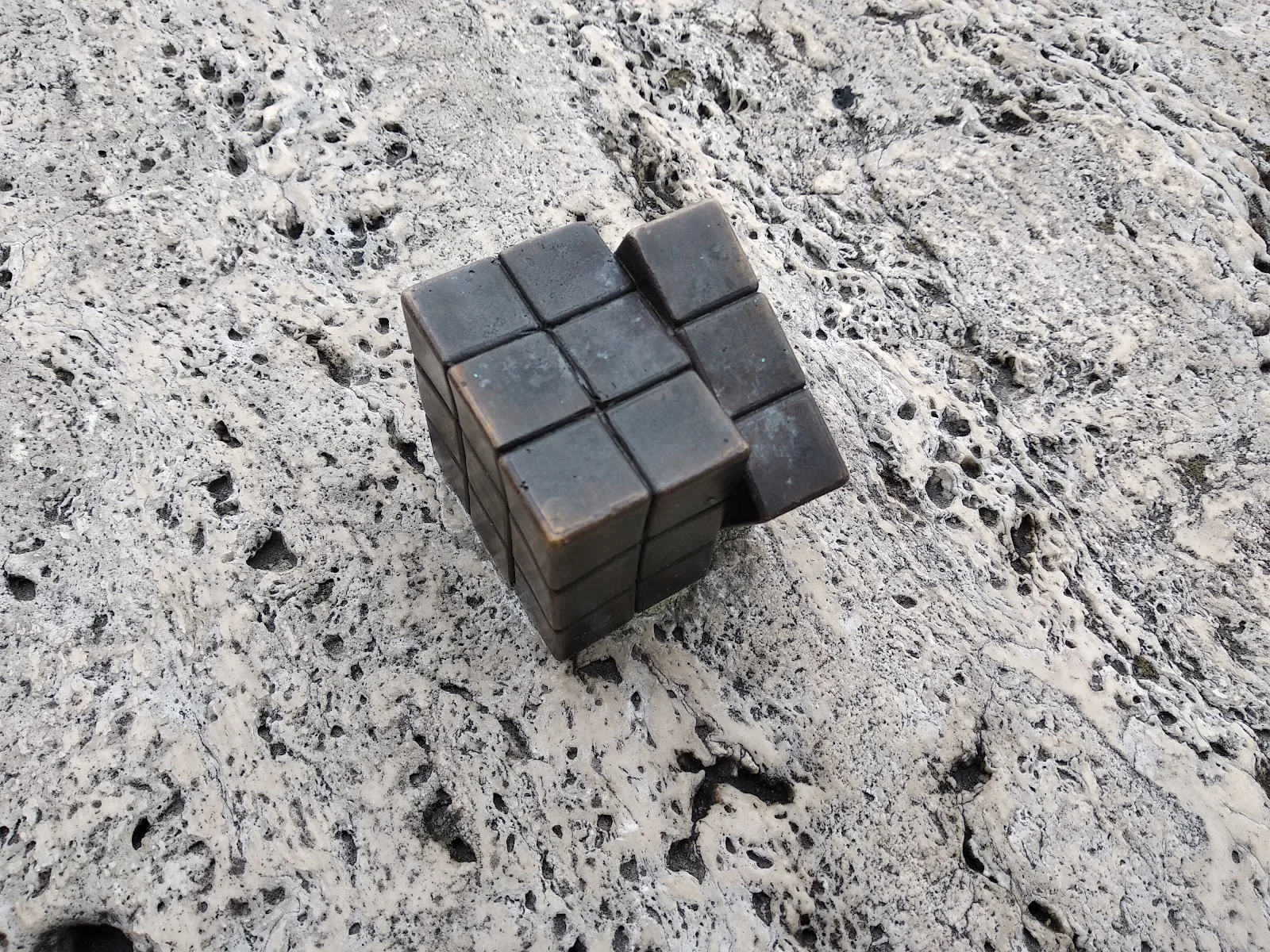
The artwork depicts a small, bronze-cast Rubik's Cube, shown not in a static, solved state, but mid-twist as if it is actively being solved. The sculpture is firmly fixed to the very edge of the stone embankment railing, looking exactly as if a passerby accidentally left their puzzle behind on the steps. It is made of solid bronze, and the squares feature a special, weather-resistant coloring.
Story
The statue unexpectedly appeared in early 2019 on the Buda side of the Danube, true to Mihály Kolodko’s early guerrilla art style—installed under the cover of night without any prior announcement or official permits. With this plastic art, the artist honors the genius 1974 invention of Ernő Rubik. Originally known as the "Magic Cube," it became a global cultural phenomenon and a universal symbol of Hungarian creativity by the 1980s.
Fun facts
- • Colors on Bronze: While most of Kolodko’s public mini-statues feature a uniform bronze patina, the Rubik's Cube is one of the rare exceptions where some faces of the cube are painted with the toy's signature original colors (red, yellow, blue, and white).
- • The Perfect Photo Angle: If you kneel down slightly and frame the shot directly from the top of the stairs, the dome of the Parliament building across the Danube perfectly fills the background. This has become one of the most popular compositions for Budapest photos on Instagram.
- • Weathering and Wear: Due to its proximity to the Danube, exposure to the elements, and thousands of touching hands, the colorful paint has faded several times over the years. However, fans and the artist himself regularly touch it up and maintain it.


