


Description
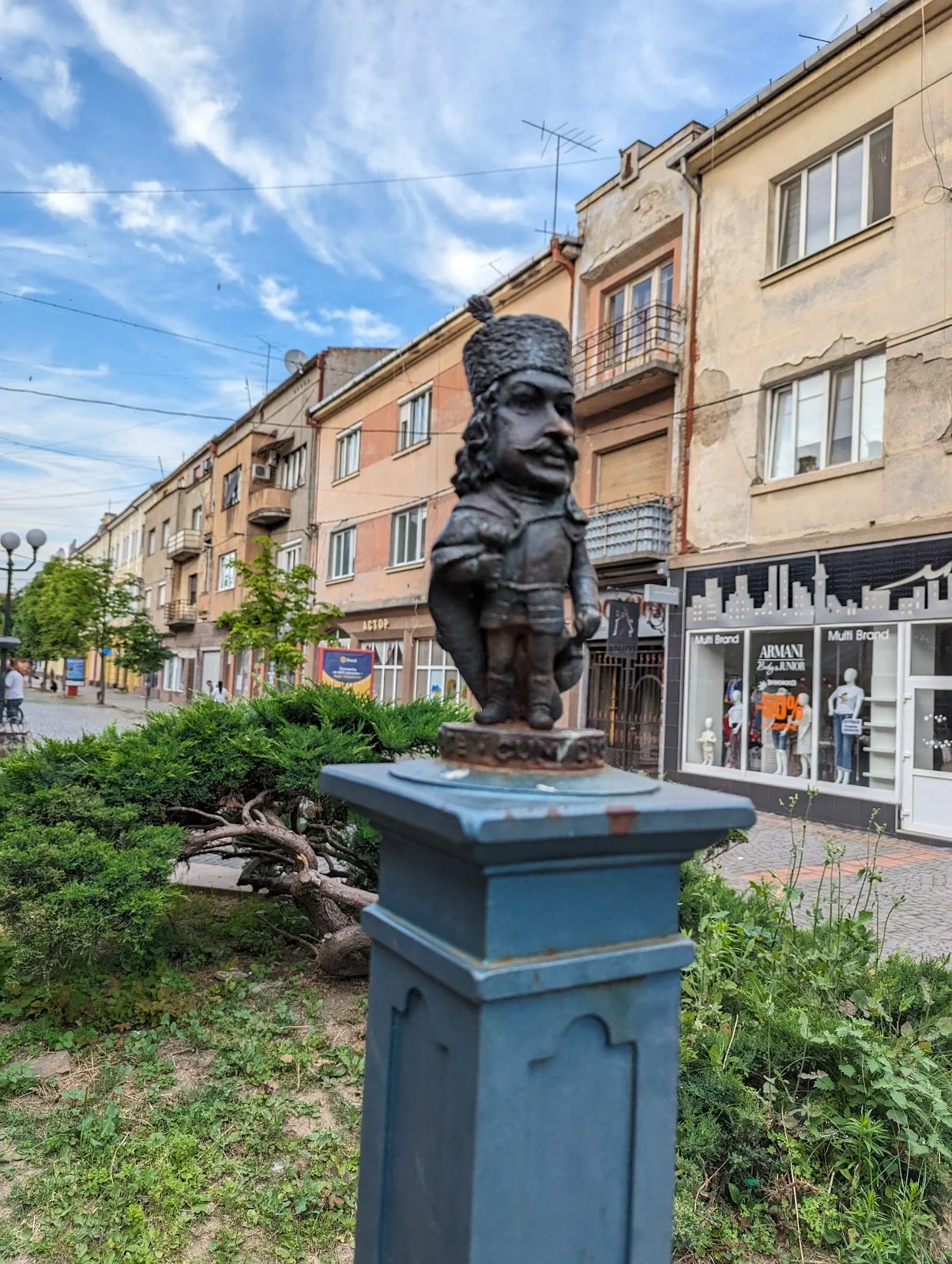
The style of the sculpture is highly symbolic and grotesque, departing from traditional, monumental depictions. The small bronze artwork portrays the prince in his characteristic Kuruc attire, complete with a traditional cap and cloak, as he proudly gazes into the distance. Kolodko subtly applies his trademark playful forms here, while the strict metal pedestal of the composition evokes the harshness of historic times and the memory of the freedom fight.
Story
The mini statue was unveiled on October 24, 2015, initiated by the Transcarpathian tourism expert Fedir Shandor. The location holds significant historical weight: the street, now known as Soborna Street, officially bore the name of Francis II Rákóczi until the end of World War II in 1945. The prince himself spent some of the most formative years of his life in the nearby Palanok Castle, living there intermittently between 1680 and 1711.
Fun facts
- • The Second in Mukachevo: This was Mihály Kolodko’s very first historically inspired mini statue, and his second piece overall in the city of Mukachevo.
- • Functional Pedestal: The statue is mounted on top of an old iron street post, which still features the vintage metal rings at its base where travelers once hitched their horses.
- • The Legendary Motto: Underneath the statue, the famous Latin motto of the Kuruc War of Independence (1703–1711) is displayed: "Cum Deo pro Patria et Libertate" (With God for Fatherland and Freedom).


