




Description
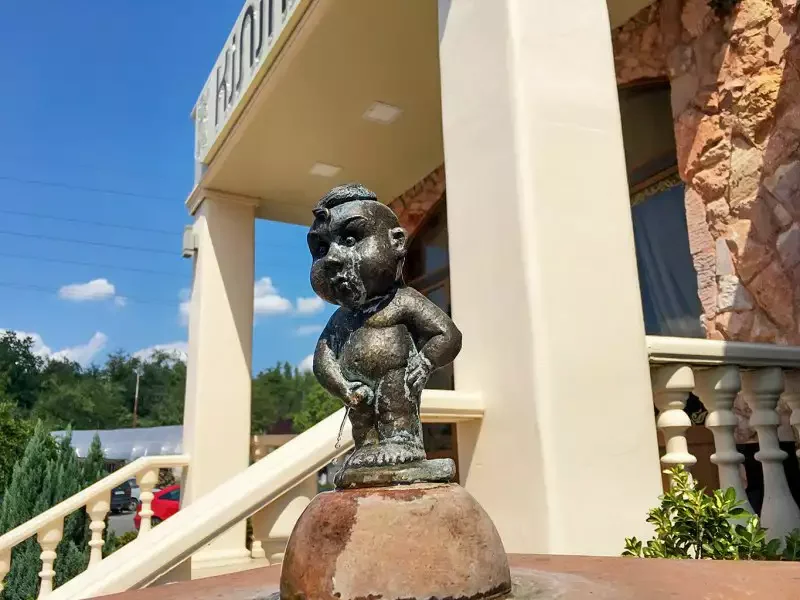
This bronze mini-sculpture faithfully replicates the proportions of the Belgian Manneken Pis, seasoned with Kolodko’s signature, delicate caricature style and the distinctive Cossack tuft. The figure stands atop a robust, reddish-brown column carved from Armenian tuff, which serves as a local freshwater well. It is officially recognized as one of the smallest public sculptures in Eastern Europe.
Story
The mini-statue was unveiled on December 8, 2015, marking the 9th anniversary of the Kilikia restaurant complex. This date represents a peak in Kolodko’s Transcarpathian creative era. The sculptor deliberately chose the motif of the famous Brussels peeing boy to symbolize Ukraine’s complicated, bittersweet relationship with the European Union at the time. "We are so close, yet at the same time so far from Europe," Kolodko noted during the opening ceremony. In a brilliant cultural twist, the boy sports a traditional Ukrainian Cossack hairstyle, the osyeledets (or tuft), blending a global icon with local heritage.
Fun facts
- • The Mizshirya (Ökörmező) Myth: A stubborn rumor persists on Central European travel blogs claiming the statue is located in the mountain town of Mizshirya (Ökörmező). This confusion stems from a linguistic mix-up: the restaurant hosting the statue is named Kilikia (after the ancient Armenian kingdom). Over time, internet forums mistakenly conflated the name Kilikia with the similar-sounding town of Mizshirya.
- • Armenian Volcanic Rock: The massive pedestal supporting the statue is not made of local stone. It was carved from authentic volcanic tuff imported directly from the Kilikia province of Armenia.
- • The Hungarian Database Flaw: Major statue registries (like Köztérkép) heavily skewed public perception by focusing almost exclusively on a later replica placed in Budapest's 13th district, leaving the original Transcarpathian mother-statue virtually undocumented in the Hungarian language.
- • It Doesn’t Pee From There! Despite what the Brussels concept implies, this artwork is actually the crown of a functional mineral water pump (buvette). The silicon-rich, health-boosting mineral water is dispensed through three separate metal taps built into the base column, rather than from the statue itself.


